
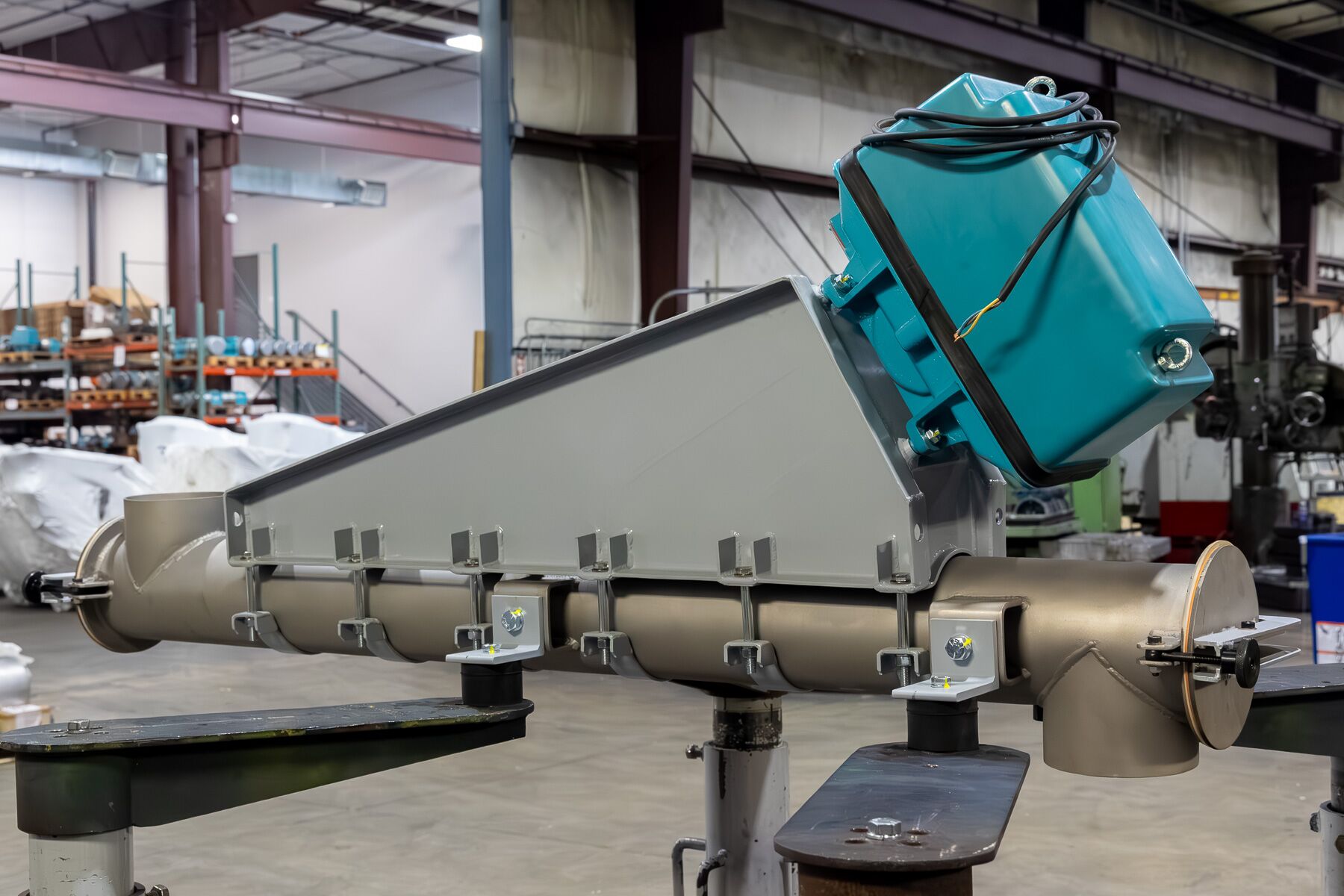
A plastics manufacturing plant reached out to JVI in need of a vibrating feeder for a new line at their facility. The feeder would be used to meter plastic pellets from a hopper into totes. The totes would be placed on a scale that interfaced with the feeder to hit specific fill weights based on the product being run.
The Challenge: Metering Plastic Pellets from Hopper to Totes
The totes being filled are large and the plant required that the feeder be able to feed 35 pcf material (pounds per cubic foot) at a rate of up to 2,000 PPH (pounds per hour) for quick filling. Along with the quick fill they also required metering to specified weights based on the product being run. There was also limited space below the feeder’s intended placement, which removed the ability to use traditional placement of the vibratory drive. In addition to these process requirements, they requested that the feeder be constructed of stainless steel for all contact surfaces and designed to control material dusting while including easy access for cleanout.

The Solution: JVI Custom Vibratory Tube Feeder
After reviewing the plant’s requirements, JVI recommended an electromagnetic tube feeder for their application. Electromagnetic tube feeders are JVI’s recommended choice when precise feed rate control and material dusting mitigation are required.
JVI designed an electromagnetic tube feeder customized to the application, work envelope, and plant’s design requirements.

Electromagnetic Drive
An electromagnetic drive was chosen for its ability to deliver 100% feed rate adjustability, instant stop/start capability, and rugged construction for precise, repeatable performance in a manufacturing environment. The drive selected provides the required 2,000 PPH throughput while also being able to adjust the feed rate instantly. This allows the feeder to meter the pellets into the totes to the required weight.
Stainless-Steel Tube
A 304 stainless-steel tube body was chosen to meet the design requirements of stainless-steel material contact surfaces and controlling dusting. The fully enclosed tube feeder design combined with dust-tight collars controls dusting, while the stainless-steel tube helps limit contamination of the final product.
Top-Mounted, Bolt-On Saddle
To address the below feeder space constraints of the work envelope, the tube feeder was designed with a top-mounted, bolt-on saddle. This places the electromagnetic drive on the top side of the feeder where the space is more readily available. The bolt-on design facilitates different material of construction from the tube reducing costs and allowing the tube to be replaced easily after many years of operational service.
Inlet and Outlet Quick Disconnect Flanges
Quick disconnect flanges were incorporated into the inlet and outlet ends of the tube feeder. These allow for access to the inside of the feeder for cleanout between the different products They also allow for quick inspection during maintenance.
Controller
A thyristor controller was included to enable the precise adjustment of the feed rate. The controller allows complete automation of the feeder to ensure the correct weight of pellets is metered to the totes. The gain in weight system consisted of a customer supplied weight control that interfaced with JVI’s thyristor controller via 4-20 mA control signal. This signal tells the controller to run at 100% thruput for 98% of the fill cycle, then slow to trickle feed for precise batching.
Performance Specifications
Capacity: Up to 2,000 PPH
Material: Plastic Pellets, 35 PCF
Material Characteristics: Free flowing
Feeder Tube: 6”D x 60” L
Drive: Single electromagnetic drive
Additional Packages: Quick Disconnect Flanges,
The Result: Consistent, Dust-Controlled Plastic Pellet Metering
After reviewing JVI’s proposal, the plant approved the proposed electromagnetic tube feeder package. Upon successful installation and commissioning, the feeder has been tied into the plant’s gain-in-weight system for filling the totes, delivering the precise metering of the pellets to the required weight, while controlling material dusting.